Texas has a physician shortage, and it is especially severe in rural and border communities. Towns across the Concho Valley, the Rio Grande border region, and West Texas struggle to recruit and retain doctors for primary care, internal medicine, psychiatry, and other high-need specialties. The Conrad 30 waiver program exists to help solve this problem by allowing foreign physicians on J-1 visas to waive the two-year home residency requirement in exchange for a commitment to practice in an underserved area.
Each state receives 30 Conrad waiver slots per federal fiscal year, and in Texas those slots fill fast. FY2027 slots open on October 1, 2026, and historically Texas slots are claimed within the first weeks. Physicians and healthcare facilities that want to participate need to prepare now, not in October.
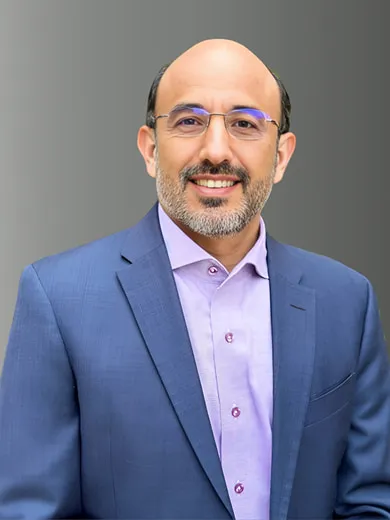
At The Lozano Law Firm, Board-Certified Immigration Attorney Alfredo Lozano helps foreign physicians and their sponsoring employers navigate the Conrad 30 process. With offices in San Antonio,
Eagle Pass, and San Angelo, we serve healthcare facilities across Texas, including the rural and underserved areas where Conrad 30 physicians are needed most.
What Is the Conrad 30 Waiver?
Foreign medical graduates who complete residency or fellowship training in the United States on J-1 visas are normally subject to a two-year home residency requirement under INA §212(e). This means they must return to their home country for at least two years before they can apply for certain U.S. visa categories, including the H-1B, or for permanent residence.
The Conrad 30 program, established under INA §214(l), provides a waiver of that requirement. If a physician agrees to work full-time for at least three years at a healthcare facility in a Health Professional Shortage Area (HPSA) or Medically Underserved Area/Population (MUA/P), the state can recommend a waiver to the Department of State and USCIS.
The program is called “Conrad 30” because each state is allotted 30 waivers per fiscal year. Some states exhaust their 30 slots within days of October 1. Texas is among them.
Who Qualifies
The physician must: – Hold or have held J-1 exchange visitor status for graduate medical education or training – Have completed (or be about to complete) their residency or fellowship – Be subject to the two-year home residency requirement – Have a full-time employment offer from a qualifying healthcare facility – Agree to practice for at least three years at the sponsoring facility
The healthcare facility must: – Be located in a designated HPSA or MUA/P (or demonstrate that the physician’s services are needed to serve patients from such areas) – Offer full-time employment (at least 40 hours per week) – Be willing to sponsor the physician’s H-1B petition after the waiver is granted
Specialties in demand: While the Conrad 30 program accepts physicians in any specialty, Texas facilities most commonly seek primary care physicians, internists, psychiatrists, OB-GYNs, and pediatricians for underserved communities. Specialists in areas like cardiology or orthopedics may also qualify if the facility serves an underserved population.
How the Conrad 30 Process Works
Step 1: Identify a qualifying facility and position.
The physician secures a full-time job offer from a healthcare facility in a designated shortage area. The facility must verify its HPSA or MUA/P designation and be willing to support the waiver application. Physicians in the San Angelo and Concho Valley region will find numerous qualifying facilities given the area’s documented healthcare shortages.
Step 2: Apply to the Texas Department of State Health Services (DSHS). The physician and employer submit a Conrad 30 waiver application to DSHS. Texas charges a $3,000 application fee. The application must include the employment contract, evidence of the facility’s shortage designation, the physician’s CV and training documentation, and a detailed description of how the physician will serve the underserved population.
Step 3: DSHS recommends the waiver. If DSHS approves the application, it sends a recommendation to the U.S. Department of State’s Waiver Review Division. DSHS processes applications on a first-come, first-served basis after October 1.
Step 4: Department of State issues a favorable recommendation. The Waiver Review Division reviews the recommendation and, if it concurs, sends a favorable recommendation to USCIS.
Step 5: USCIS grants the waiver. USCIS adjudicates Form I-612 (Application for Waiver of the Foreign Residence Requirement) based on the State Department recommendation.
Step 6: File the H-1B petition. Once the waiver is approved, the employer files an H-1B petition for the physician. Conrad 30 H-1B petitions are exempt from the annual H-1B cap, which is a significant advantage.
Step 7: Begin the three-year commitment. The physician works full-time at the designated facility for at least three years. After completing the commitment, the physician is free to pursue other employment and can apply for permanent residence through PERM labor certification or other pathways.
Important Caveat: Conrad 30 Reauthorization Status
The Conrad 30 program has historically been reauthorized by Congress on a periodic basis. The most recent statutory authorization lapsed for J-1 physicians who entered exchange visitor status on or after October 1, 2025. As of this writing, Congress has not passed a new reauthorization.
This does not necessarily mean the program is unavailable. Physicians who entered J-1 status before October 1, 2025 may still be eligible under the prior authorization. Additionally, Congress may pass a reauthorization before or shortly after the FY2027 filing season begins.
If the Conrad 30 program is unavailable for your situation, alternative J-1 waiver pathways exist, including waivers through the Interested Government Agency (IGA) program, the Department of Health and Human Services, the Veterans Administration, and the Department of Defense. An immigration attorney can assess which pathway applies to your case.
Alternative J-1 Waiver Pathways
If the Conrad 30 is not available or if all 30 Texas slots are filled, physicians have other options:
Interested Government Agency (IGA) waiver. A federal agency (such as HHS, VA, or DoD) can request a waiver on behalf of a physician. These are not subject to the 30-slot state limit.
Hardship waiver. If the physician’s departure would impose exceptional hardship on a U.S. citizen or permanent resident spouse or child, a hardship-based waiver may be available.
Persecution waiver. If returning to the home country would subject the physician to persecution based on race, religion, or political opinion, a persecution-based waiver may apply.
No-objection statement. If the physician’s home country government issues a “no objection” statement, USCIS may grant the waiver. However, this option is not available for physicians whose J-1 programs were government-funded.
Common Mistakes to Avoid
Missing the October 1 filing window. Texas slots historically fill within the first two to three weeks. Applications submitted in November or December are unlikely to receive one of the 30 slots.
Choosing a facility that loses its designation. HPSA and MUA/P designations are reviewed periodically. If a facility loses its designation during the physician’s three-year commitment, the physician may face complications. Verify the stability of the designation before committing.
Inadequate employment contracts. The employment contract must clearly state the three-year commitment, the full-time hours requirement, and the facility’s location in a qualifying area. Vague or non-compliant contracts can result in application denial.
Not having a backup plan. If the Conrad 30 slots are exhausted before your application is processed, having an IGA or other alternative waiver pathway ready prevents a gap in status.
Frequently Asked Questions
How many Conrad 30 slots does Texas get?
Texas receives 30 slots per federal fiscal year (October 1 through September 30), the same as every other state.
How quickly do Texas Conrad 30 slots fill?
Historically, Texas slots are among the fastest to fill in the country. Applications submitted within the first two to three weeks of October 1 have the best chance. Late applications are unlikely to secure a slot.
Can I change employers during my three-year commitment?
Changing employers during the three-year commitment is possible but complex. Any change must still satisfy the Conrad 30 requirements (underserved area, full-time practice), and the new employer must file a new H-1B petition. Leaving without completing the commitment can result in reinstatement of the two-year home residency requirement.
What happens after my three-year commitment?
After completing the three-year commitment, you are free to practice anywhere in the United States. Many physicians pursue permanent residence through employer-sponsored green cards (PERM
and EB-2 or EB-3) or through a National Interest Waiver.
Can my family accompany me on a Conrad 30 waiver?
Yes. Your spouse and unmarried children under 21 can hold H-4 dependent status while you are on the H-1B. H-4 spouses may be eligible for employment authorization in certain circumstances.
Prepare Your Conrad 30 Application Now
FY2027 slots open October 1. If you are a foreign physician completing training in the United States, or a healthcare facility in Texas looking to recruit a J-1 physician, the time to prepare is now.
Board-Certified Immigration Attorney Alfredo Lozano holds Board Certification in Immigration and Nationality Law from the Texas Board of Legal Specialization. The Lozano Law Firm helps physicians and healthcare facilities across Texas navigate the Conrad 30 process and alternative J-1 waiver pathways.
Contact us to start your Conrad 30 application before the FY2027 window opens.